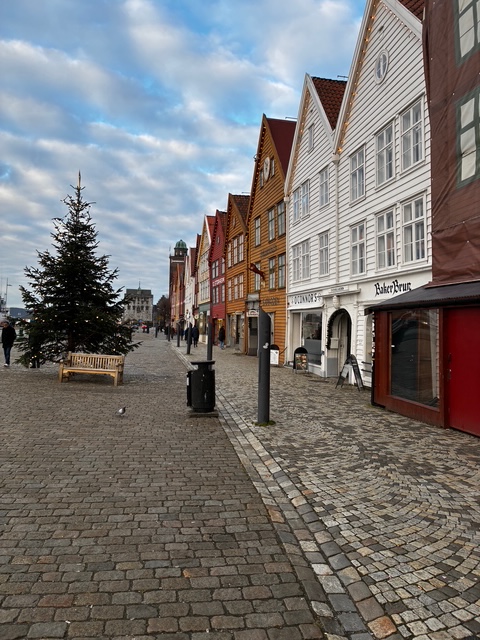
In December 2025, I went to Bergen, Norway to see how much Norwegian I could learn (from scratch) in a nine-day sprint. The following paper details that experiment. I used a combination of direct instruction, mnemonic strategies, interaction, and journaling to see how far I could get. It was a fun project and I hope to continue to develop some of the principles at work in further research.

Lincoln Snyder, December 23, 2025
The Nine-Day Sprint: Optimizing Short-Term Study Abroad for Rapid L2 Acquisition
Abstract
This report details the design, execution, and assessment of a high-intensity, nine-day Study Abroad (SA) sojourn in Bergen, Norway (December 6–15, 2025). Titled “The Nine-Day Sprint,” this project served as an auto-ethnographic intervention designed to test a research-driven hypothesis: that a polyglot learner can maximize oral fluency and pragmatic competence in a short-term immersion context through targeted learner agency, cognitive bridging strategies, and systematic “noticing” protocols. The study combined 30 hours of intensive Bokmål Norwegian instruction with a rigorous, self-imposed regimen of social interaction, phonological drilling, and reflective journaling grounded in Schmidt’s Noticing Hypothesis and Robinson’s attentional models. Results indicate significant gains in receptive vocabulary and phonological awareness, validating the efficacy of cognate exploitation. However, spoken fluency and deeper pragmatic growth were constrained by the structural absence of a homestay environment, confirming that while “sprint” methodologies can accelerate lexical and structural acquisition, the development of spontaneous communicative competence requires the sustained social integration that short-term, independent living arrangements struggle to provide.
Full Report
1. Introduction
Study Abroad (SA) is widely recognized as a high-impact practice for Second Language Acquisition (SLA), particularly for oral fluency and sociolinguistic competence (Isabelli-García, 2006). Most sojourns are short in duration, measured in weeks, and not months or semesters; indeed, for adult learners and professionals, such extended sojourns are often impractical. A short-term sojourn can still bring benefits (see Zalbidea & Faretta-Stutenberg, 2022), and this research project stress-tested specific SLA methodologies within a compressed timeframe. Rather than simply asking if a learner can learn Norwegian in nine days, this study asks: to what extent can particular interventions – in this case, guided journaling, cognate bridging strategies, and the promotion of Noticing – accelerate the acquisition of oral fluency and pragmatic competence when applied with a high level of learner agency during a short-term sojourn?

This project, the “Nine-Day Sprint,” took place in Bergen, Norway, from December 6–15, 2025. It centered on a 30-hour intensive Bokmål Norwegian course provided by a private company (New 2 Norway). The goal was to move beyond passive immersion to a deliberate, high-intensity intervention. I framed this approach as a “language blitz,” leveraging specialized learning techniques and my multilingual background to achieve basic pragmatic skills, a lexical base, and a phonological foundation for sustained learning.
This study is auto-ethnographic, and as the subject of this intervention, I present a unique learner profile. Although I had never studied a North Germanic language and my Norwegian knowledge as of December 4, 2025 was limited to one phrase (“hva heter du?” that is, “what’s your name?”) I bring broad linguistic and intercultural expertise to the project. In West Germanic languages, I am a native speaker of English, and I am fluent in German; conversational in Dutch, Pennsylvania Dutch and Yiddish; and have had instruction in Afrikaans. I am fluent in Polish, a Slavic language, and at one time I was conversational in Spanish, but those skills are rusty. I am familiar with both sheltered immersion and the “sink or swim” method of acquisition, having previously lived in Germany, Austria, and Poland, navigating new linguistic environments with varying levels of initial instruction.
The sojourn centered on a five-day, thirty-instructional-hour intensive course in Bergen, Norway (New 2 Norway). I paid for travel, tuition, lodging, and food out of personal funds, with an estimated total cost of $3000. This program, though intensive, was not an immersion program; I stayed in a rented studio apartment in the city center. I focused on four specific domains of acquisition:
- Oral Fluency: My objective was to establish a base for achieving flow in the speed, rhythm, and smoothness of speech production.
- Pragmatic Competence: I followed Marijuan et. al.’s observation that “language development is seen as a situated, dynamic social practice” (Marijuan and Vallejos, in Perez-Vidal and Sanz, p. 215). I expected my pragmatic gains in that week to be a function of the collection and production of instances, and not deeper generalizations.
- Phonological Development: Because I was starting from scratch, I focused intensively on mastering challenging Norwegian vowel sounds (e.g., ø, y) and suprasegmental features like pitch and stress.
- Lexical Base: My goal was to acquire the first 1,000 high-frequency words of receptive vocabulary within the nine-day period.
2. Theoretical Framework
I grounded my curricular design in three primary research-based pillars which helped me move from general immersion principles to specific cognitive strategies: the Noticing Hypothesis, learner agency, and journaling.
2.1. The Noticing Hypothesis
Central to my methodology was Richard Schmidt’s “Noticing Hypothesis,” which posits that input only becomes intake for learning when the learner consciously notices the form. Richard Schmidt and Sylvia Nagem Frota’s “Developing Basic Conversational Ability in a Second Language” (Schmidt and Frota, 1986) is a diary study documenting Schmidt’s own acquisition of Portuguese during a five-month stay in Brazil. Schmidt’s study contrasts two distinct learning phases: an initial period of pure immersion without formal instruction, and a subsequent period combining immersion with a structured class. Schmidt found that immersion alone was insufficient for grammatical accuracy; despite high motivation and interaction, Schmidt’s grammar fossilized early. Progress occurred when he combined instruction with interaction, leading to the Noticing Hypothesis: the idea that input does not become intake for learning unless the learner consciously Notices1 the form. “We propose instead that in the particular case of a nontargetlike form i and a targetlike form i + 1 a second language learner will begin to acquire the targetlike form if and only if it is present in comprehended input and ‘noticed’ in the normal sense of the word, that is, consciously” (Schmidt and Frota 1986, p. 311). The study bridges the gap between naturalistic acquisition and classroom learning, arguing that conscious attention to form is a prerequisite for converting input into spoken competence.

Building on this, Robinson (1995) refines the concept by integrating cognitive psychology models of attention and memory. He argues that Noticing is an active process of “detection plus rehearsal” within short-term memory. According to Robinson, what we Notice is constrained by data-driven processes (the salience of the input) and conceptually-driven processes, that is, expectations (Robinson, 1995, p. 296). This implies that Noticing is a resource-limited action; we cannot Notice everything. Therefore, my journaling protocol was designed to focus attention on specific features that might otherwise escape detection.
While Schmidt and Robinson clarify how input becomes intake, Pannell et al. (2017) argue that production is equally critical. Drawing on Swain’s Output Hypothesis, they posit that “output” is a driver of learning, serving a Noticing function where the struggle to speak makes the learner aware of a gap in their knowledge. Crucially, they emphasize “pushed output”—communicative demands that force the learner to move from simply conveying meaning to producing accurate grammar (Pannell et al., 2017, p. 162). This suggests that high-agency interactions are valuable because the pressure to communicate “pushes” the learner to construct forms they haven’t yet automatized.
John Truscott (1998) offers a formidable critique that complicates this picture. Truscott argues that the cognitive foundations of the Noticing Hypothesis are weak and that research in psychology does not clearly support awareness as a necessary condition for learning. He posits that while Noticing might be necessary for acquiring metalinguistic knowledge (knowing about the language), it is not necessarily required for acquiring competence (the implicit, underlying system). This critique serves as a necessary check against assuming that every Noticed error automatically translates into spontaneous accuracy (Truscott, 1998).
These theoretical perspectives create a dynamic tension that directly informs the design of the “Nine-Day Sprint.” Schmidt and Robinson provide the cognitive justification for the Guided Reflective Journal, framing it not as a diary but as a tool for attentional allocation and rehearsal. Pannell et al. provide the behavioral imperative for seeking out opportunities to speak “in the wild,” framing these not just as cultural immersion but as drivers behind pushed output that force syntactic processing. Finally, Truscott’s critique provides the necessary evaluative lens, reminding me to distinguish between the metalinguistic knowledge I capture in my journal (what I know) and the implicit competence I demonstrate in speech (what I do). This triangulation of Noticing, production, and critical skepticism forms the core of my research methodology.
2.2. Learner Agency
Research by Mitchell (2015) and Strawbridge (2023) highlights that linguistic gains in SA are heavily dependent on the learner’s active construction of social networks, with network size, diversity, and activity all playing important roles (Strawbridge, 2023). Recognizing that a nine-day trip provides little time for organically building friendships, my plan followed Schmidt in proactively forcing interactions in service encounters and social venues to compensate for the lack of established ties (Schmidt and Frota, 1986). I pre-committed to prioritizing fluency over grammatical accuracy, pushing usage even at the risk of error to maximize output.
2.3. Journaling
A central instrument of the study was a Guided Reflective Journal (Plews et al., 2023), implemented via Google Forms. During the sojourn, I maintained a reflective journal in English to systematically track my progress and ensure I am maximizing learning and retention. As Plews et. al. note, “journals-based SA research shows how the language and learning awareness generated by journaling can lead to L2 development. This is especially noticeable when they are both research instruments and assignments with feedback” (Plews et. al. in Perez-Vidal and Sanz, p. 119). Unlike many novice journals that focus on affective support such as managing anxiety and culture shock (Savicki & Brewer, 2015), this “Expert/Polyglot” journal was designed as an analytical tool for “Linguistic Engineering” (Schmidt & Frota, 1986). For a novice student, the primary function of journaling is often affective regulation and basic Noticing, serving as a safe space to process culture shock and build the confidence required to initiate communication (Plews et al., 2023). In contrast, my journaling practice functioned as an analytical laboratory designed to manage cross-linguistic interference and accelerate transfer, focused less on emotional processing and more on collecting negative evidence, tracking errors caused by interlingual interference to prevent fossilization.
My journaling practice thus moved beyond simply recording events to actively analyzing my linguistic performance and cognitive strategies. In documenting participant journaling that “attended to linguistic competence, such as vocabulary, grammatical gender, and pronunciation, but also social, discursive, and macro-level strategic competence,” participants are able contribute positively to their L2 growth (Plews et. al. in Perez-Vidal and Sanz, p. 120). I dedicated substantial time, approximately one hour daily, to journaling. While a novice might benefit most from logging small wins that help develop self-efficacy, my journal targeted more specific analysis to calibrate linguistic precision. My goal was to leverage my metacognitive awareness to turn the journal into a mechanism for rapid, self-regulated acquisition.
| Table 1. Focus and Benefits of SA Journaling – Author vs an SA Novice | ||
| Feature | The Author (The Expert) | SA Novice (The Student) |
| Primary Function | Analytical Tool: Used to calibrate linguistic precision and manage interference from other languages. | Emotional Anchor: Used to manage anxiety and validate the struggle of immersion. |
| Content Focus | Negative Evidence: Focusing on what you got wrong in order to quickly self-correct. | Positive Evidence: Focusing on what they got right to build momentum and willingness to communicate. |
| Linguistic Depth | Cross-Linguistic: Mapping Norwegian against Dutch/German/English structures. | Monolingual/Translation: Mapping Norwegian directly to L1 English meanings. |
| Phonology | Technical: Analyzing pitch accent and suprasegmentals. | Basic: Just trying to be understood; noting sounds that are “hard.” |
| Time Spent | 1 Hour +: Greater awareness of benefits means willingness to process at length. | 20 Mins: High burnout risk; reflection needs to be brief and restorative. |
2.4. Cognitive Bridging (The “Green List” Strategy)
To leverage my multilingual background, I utilized a cognate-based lexical strategy. Research suggests that bridging known languages to the target language correlates with higher proficiency30. I categorized vocabulary into three tiers:
- Green List: Direct cognates requiring a simple bridge.
- Yellow List: Cognates requiring a mnemonic bridge.
- Red List: Non-cognates or deep cognates requiring rote memorization, more creative mnemonics, and aggressive Spaced Repetition System (SRS) drilling.
This system allowed me to focus my cognitive energy on the Yellow and Red words.

3. Methodology and Curricular Design
3.1 The Intervention Structure
The sojourn took place from December 6–15, 2025, in Bergen, Norway. The core instructional component was a 30-hour intensive course provided by a private company (New 2 Norway). The instruction was delivered in German, leveraging my L2 fluency to accelerate L3 explanations. I resided in a private studio apartment in the city center due to the lack of a homestay option, a logistical necessity that would significantly impact the social outcomes of the project.
3.2 The Four-Phase Curriculum
The nine days were structured into distinct phases to maximize the “sprint” effect:
- Phase 1: Pre-Trip: I prepared Excel frequency lists to identify “Green List” words41. This phase was minimal; having collected my materials over the course of the fall, I spent the morning of the departure organizing my lists and materials, but my true learning started at the airport.
- Phase 2: Arrival (Days 1–2): My goal was to initiate at least 10 real-world interactions per day (ordering food, asking directions, buying tickets) to break the language barrier immediately upon arrival; I did not reach that goal, but still had several interactions per day. I engaged in active listening and reading in the local environment.
- Phase 3: The Course (Days 3–7): This phase involved 5 hours of daily instruction plus at least 3 hours of self-study and journaling. My behavioral goal was to be the most active speaker in class and to force language barriers “in the wild” during the evenings. My daily lexical target was to process 150 words using SRS tools.
- Phase 4: Application (Days 8–9): My final days focused on continuing to seek out speaking opportunitites, reviewing my data, and writing my report.
3.3 My Journaling Protocol
The journal included 14 prompts across four sections. The four sections were:
- Linguistic Engineering: Tracking “Red List” words and analyzing phonological errors (e.g., “Was the error articulatory or due to L1 interference?”).
- Pragmatic Analysis: A “Speaking Opportunity Score” to quantify interactions and a “Leave-Taking Diagnostic” to analyze social closings.
- Input Diagnostics: Connecting classroom grammar to street observations (The “Classroom-to-Street” Bridge).
- Intercultural Calibration: Monitoring digital habits to prevent retreating into an English-language bubble.
I include the full set of questions together with the research rationale in Appendix 1.
4. Execution and Results
4.1 Instructional and Lexical Efficacy
The direct instruction was traditional in its structure but proved effective. The course, taught by a Norwegian native who spent 33 years in Germany, covered over half of the A1 curriculum based on the textbooks (Manne and Nilsen, 2010; Schirmer, 2017). Grammatical topics included verb conjugation, present perfect tense, adjective endings, and definite and indefinite articles. The use of German as the medium of instruction was a strategic asset, allowing for rapid cognate referencing, although I noted occasional hesitation in vocabulary retrieval due to mnemonic bridges in multiple languages.
My self-study results were robust. Among other apps, I utilized Clozemaster for over 13 hours during the week, reviewing over 4,000 cards with a 96.11% accuracy rate. (See Appendix 2 for a review of the apps and books I used). Clozemaster’s method of presenting words in context helped me Notice grammar I had not yet learned in class, such as the imperfect tense. This digital drill validated the “Green/Red List” strategy; I could retire mastered words quickly to focus on the more difficult words. Words fell onto a spectrum across the red/yellow/green scale; I found that my “yellow” category was subjective, with some close cognates proving tricky due to unpredictable (or yet-Unnoticed) shifts. I learned the major grammatical features quickly despite some quirks (Norwegian agglutinates the definite article, for example), and much of my learning curve has been with the idiomatic connective tissue of the language (prepositions, conjunctions, relative pronouns, “hither/thither” distinctions, etc).

Quantitative Result (Vocabulary):
On a self-test of the 956 most frequent Norwegian words2, I scored 672/956 (70%) at the end of the nine days. I also learned many words that were not on the list and therefore not measured. While numerically short of the 1,000-word goal, this represents a quick rate of acquisition, validated by my increasing ability to parse input in the environment.
Phonological Development: Awareness vs. Production
My focus on phonology yielded high awareness but incomplete production. The journal’s “Vowel & Pitch Check” successfully kept difficult sounds (ø, y, kj) in focus. I achieved high diagnostic capability, instantly recognizing when a sound was mispronounced, but found that mastery of production lagged behind. Although the language is stress-timed, I observed that word linking is a consistent feature of spoken Norwegian (at least in Bergen), making comprehension difficult for a novice listener. I concluded that while Noticing can be sprinted, the physiological adaptation of the vocal tract and training of the ear for fast speech require sustained practice beyond nine days.
4.3 Pragmatics and The “Homestay Deficit”
The most significant finding regarding the sojourn’s limitations was the impact of living arrangements. I achieved a degree of transactional competence, successfully navigating service encounters and basic social exchanges. The “Leave-Taking Diagnostic” ensured these interactions ended with appropriate sociolinguistic markers rather than abrupt exits. However, the lack of a homestay limited my growth. I noted that without a host family, the sustained opportunities to speak and be spoken to in a safe environment were missing. My goal of at least ten authentic exchanges per day proved unachievable outside of shopping; interactions were largely limited to transactional bursts or classroom talk. On a positive note, the mere existence of the question regarding the number of interactions in my journal forced me into more interactions than I would have had otherwise; even at my most exhausted, I still forced exchanges outside class. A successful extended conversation in a bar on Day 6 demonstrated the potential of the exercise, but such opportunities were difficult to replicate consistently due to social barriers and cost. My classmates spoke German with each other after class, eliminating the opportunity for peer interaction in Norwegian. I realized that deeper pragmatic mastery requires access to more intimate social networks than a short-term, independent sojourn without a homestay or language pledge could provide.
4.4 The Efficacy of the Journal
The journaling protocol was a decisive success. The exercise reminded me of a mantra a superintendent colleague used regarding data-driven practice: “We treasure what we measure!” (Michael Juhas, personal conversation, 2021-2024). The requirement to record a daily “Speaking Opportunity Score” acted as a behavioral trigger, forcing me to leave the apartment on rainy nights to seek interactions solely to have data to report. The Noticing prompts also validated Schmidt’s hypothesis; I found that conscious attention to form in the evening helped identify gaps in interlanguage that would otherwise have gone unchecked. The journal forced me to remain focused and self-aware, providing a context for sharing my progress.
5. Discussion and Theoretical Implications
5.1 The Limits of “Hacking” Immersion
The “Nine-Day Sprint” demonstrated that knowledge (lexicon, grammar, phonological theory) can be accelerated through polyglot hacking and intensive study. However, connection (spontaneous flow, deep pragmatic understanding) remains resistant to acceleration without structural support. The island of a private apartment proved to be a significant barrier to the “network intensity” Mitchell (2015) identifies as crucial for growth.
5.2 The Polyglot Advantage is both Lexical and Methodological
My success in vocabulary acquisition shows that the polyglot advantage is not magic, but a combination of lexical base and method. It is the ability to strategically appropriate what is known and focus on the unknown. This suggests that SA curricula for experienced learners should differ fundamentally from novice curricula, focusing on difference analysis and bridging rather than broad introduction.

6. Recommendations and Future Research
Based on the findings, I offer refined protocols for future research and pedagogical applications.
6.1 Return to Norway and Protocol Refinement
In considering best practice for future sojourns, the lack of a homestay is the primary challenge to mitigate. I am in discussions with a language school regarding a return to Norway for another short-term sojourn, and since the program does not offer homestays, I have asked the language school to help facilitate two interventions:
- Dinner with a local: a paid arrangement to share a daily meal with a native speaker, ensuring at least 60 minutes of guaranteed, high-context conversational output per day; and
- A language pledge: I have asked whether other learners will join me in a language pledge and practice after class; the facilitator assured me that at least one other learner is interested.
6.2 Pedagogical Application: Georgetown-in-Trier
I will adapt the guided journal protocol for undergraduate students in the Summer 2026 Georgetown-in-Trier program, where I am currently scheduled to teach German. As a Noticing diary, my journaling was effective not just because it recorded errors, but because the act of logging served as the “rehearsal” mechanism Robinson identifies as crucial for transferring information from short-term to long-term memory (1995). This explains why my phonological awareness of vowels improved rapidly—the daily check forced attentional resources toward specific, salient features. For future plans, this means that simple exposure is insufficient; I must engineer tasks that specifically overload attentional resources in a way that forces detection.
6.2.1. The Most Helpful Questions
In my upcoming teaching in Trier, I will implement structured Noticing tasks—activities that ask students to not only listen, but require them to detect and rehearse specific, low-salience grammatical forms (like endings or particles) that might otherwise escape detection in the flood of input. Regarding these goals, I found the journaling prompts regarding the following topics most helpful:
- The daily summary of what happened in class;
- A reflection on green words and red words from the day;
- A reflection on phonological development;
- The Noticing Hypothesis;
- Tracking speaking opportunities outside of class;
- Interactions in English;
- A reflection on what to adjust for the next day.
Though not a formal part of this study, I also recorded a daily video, and found it encouraged reflection and awareness. I provide a link to my video posts in Appendix 3.
6.2.2. Modifications for Undergraduates
I assess that these same questions will be useful for undergraduate students during a sojourn, but I would modify the journal as follows, still using a Google Form for journaling:
- I will have the students journal about questions 1-3 from section 6.2.1 (reflection on class; green/red words; phonological development) as an in-class exercise during the last 10-15 minutes of class, using a Google Form to collect and organize the answers.
- I will ask the students to journal about questions 4-7 from section 6.2.1 (the Noticing Hypothesis; tracking speaking outside of class; interactions in English; reflection on adjustments) on their own for 15 minutes daily.
- I will modify question 5 to track two kinds of L2 speaking opportunities: host family interactions, and everything else. Having personally observed SA students miss opportunities to speak with their host families, my goal is to reinforce the value of primary discourse and inspire reflection on the differences between interactions in the home and outside it.
- I will start class with a centering activity that would include an opportunity to voluntarily share their reflections.
6.3 Summary of Future Projects
- Norway (March 2026): The Norskprøve Challenge As noted above, I plan to return to Norway for a second short-term sojourn during the Spring Break in March 2026. The objective of this trip is to continue my Norwegian education by preparing for the Norskprøve, the national Norwegian language test for aspiring citizens normed to the B1 level. My goal is to take the test during the summer 2026 testing window.
- Trier (June 2026): Pedagogical Application Having applied to teach at the Georgetown-in-Trier program, I intend to shift roles from learner to researcher-practitioner, as described above. In collaboration with the German Department, I will introduce the Guided Reflective Journal as a structured intervention for my students.
- Yiddish Immersion (August 2026): Correcting the “Homestay Deficit” To further research how to address the primary weakness of the Norway sprint—the lack of immersion and deep social integration—I plan to attend a Yiddish-language immersion camp in Upstate New York, either Yidish-vokh (Jugntruf) or Yiddishland (Workers’ Circle). These programs are well-established “language pledge” environments with strong cultural and community-building components. This context will allow me to test the same strategies (interaction; journaling; cognate bridging) but within a structure that offers full immersion and sustained peer interaction.
7. Conclusion
The “Nine-Day Sprint” successfully demonstrated that with high learner agency, strategic front-loading, and rigorous reflective practice, significant linguistic proficiency can be constructed in a very short timeframe. I acquired a functional lexical base and high phonological awareness in just over a week, validating the use of those strategies. However, the experiment also highlighted that the “vacation effect” is structural. A lack of homestay pushes the learner toward transactional exchanges, limiting the development of fluid, spontaneous speech. Without the captive audience of a homestay, social integration is extremely difficult to sprint. The project validates the Guided Reflective Journal as a powerful tool for self-regulated learning: we treasure what we measure. By measuring both challenges and successes, the learner transforms the joyful chaos of immersion into a measurable and manageable campaign of acquisition.
Bibliography
Breś, K. (2022). Norweski w obrazkach: Słownik, rozmówki, gramatyka. Edgard Jezykiobce.pl.
Chen, C.-C., Ochab, J., & Paradowski, M. B. (2022). How output outweighs input and interlocutors matter for study-abroad SLA: Computational Social Network Analysis of learner interactions. The Modern Language Journal, 106(4), 694–725. https://doi.org/10.1111/MODL.12811
Cohen, A. D., Paige, R. M., Shively, R. L., Emert, H. A., & Hoff, J. G. (2005). Maximizing study abroad through language and culture strategies: Research on students, study abroad program professionals, and language instructors. Center for Advanced Research on Language Acquisition, University of Minnesota.
Crane, C. (2018). Making connections in beginning language instruction through structured reflection and the world-readiness standards for learning languages. AAUSC 2016 Volume—Issues in Language Program Direction, 51-74.
Dominik Gyecsek. (2023). Most Common Norwegian Words (Version 5.4) [Mobile app]. Apple App Store. https://apps.apple.com/app/most-common-norwegian-words/id6473900511
Dorer, K. L., & Aarsvold, N. (2023). Sett i gang I: An introductory Norwegian curriculum. NorWords.
Dressler, R., & Tweedie, M. G. (2016). Dialogue journals in short-term study abroad: “Today I wrote my mind”. TESOL Journal, 7(1), 84-96.
Duolingo. (2023). Duolingo: Language lessons (Version 7.103.0) [Mobile app]. Apple App Store. https://apps.apple.com/app/duolingo-language-lessons/id570060517
Gabaudan, O. (2013). E-xperience Erasmus: Online journaling as a tool to enhance students’ learning experience of their study visit abroad. Proceedings of the 2013 EUROCALL Conference, Évora, Portugal, 93-97.
Gabaudan, O. (2016). Too soon to fly the coop? Online journaling to support students’ learning during their Erasmus study visit. ReCALL, 28(2), 123-146.
Google. (2025). Google Sheets. https://sheets.google.com
Hassall, T. (2006). Learning to take leave in social conversations: A diary study. In M. A. DuFon & E. E. Churchill (Eds.), Language learners in study abroad contexts (pp. 31-58). Multilingual Matters.
Haugen, E. (1977). Norwegian-English dictionary: A pronouncing and translating dictionary of modern Norwegian. Universitetsforlaget.
Innovative Language Learning. (2025). Norwegian Class 101. (Version 3.2.8). www.norwegianclass101.com
Kemp, J. (2010). The listening log: Motivating autonomous learning. ELT Journal, 64(4), 385-395.
Klar Tale. (2025, May 2). About Klar Tale. https://www.klartale.no/om-oss/about-klar-tale/2780583
Language Innovation LLC. (2023). Clozemaster: Language learning (Version 2.11.18) [Mobile app]. Apple App Store. https://apps.apple.com/app/clozemaster-language-learning/id1149199075
Lee, J.-A., & Jang, I. C. (2023). From linguistic insecurity to confidence: Language emotion and ideology in South Korean study-abroad students’ post-journey reflections. Linguistics and Education, 77, 1-10. https://doi.org/10.1016/j.linged.2023.101206
LingQ Languages Ltd. (2023). Language learning | LingQ (Version 5.8.7) [Mobile app]. Apple App Store. https://apps.apple.com/app/lingq-language-learning/id379385811
Manne, G., & Nilsen, G. K. (2010). Ny i Norge. Fag og Kultur.
Memrise. (2025). Memrise: Languages for life (Version 2025.12.5) [Mobile app]. Apple App Store. https://apps.apple.com/us/app/memrise-language-learning/id639818839
Mitchell, R., Tracy-Ventura, N., & McManus, K. (Eds.). (2015). Social interaction, identity and language learning during residence abroad. European Second Language Association.
Mondly. (2023). Mondly: Learn 41 languages (Version 10.65.0) [Mobile app]. Apple App Store. https://apps.apple.com/us/app/mondly-learn-41-languages/id987873536
New 2 Norway. (n.d.). Explore Bergen. New 2 Norway Explore Bergen. https://www.new2norway.com/category/Explore-Bergen
Pannell, J., Partsch, F., & Fuller, N. (2017). The output hypothesis: From theory to practice. TESOL Working Paper Series. https://www.hpu.edu/research-publications/tesol-working-papers/2017/2017-new-with-metadata/06pannellpartschfuller_output.pdf
Panvini, D. (2020). Guided journaling: Focused writing to enhance learning during a STEM short-term study abroad course. The American Biology Teacher, 82(5), 348-356.
Pérez-Vidal, C., & Sanz, C. (Eds.). (2023). Methods in study abroad research: Past, present, and future. John Benjamins Publishing Company.
Pimsleur Language Programs. (2011). Norwegian I [Audiobook]. Simon and Schuster.
PLANB LABS OU. (2023). Language learning games: Drops (Version 38.87) [Mobile app]. Apple App Store. https://apps.apple.com/us/app/language-learning-games-drops/id939540371
Plews, J. L., Misfeldt, K., & Feddersen, R. (2023). Diaries and journals in study abroad research. In C. Pérez-Vidal & C. Sanz (Eds.), Methods in study abroad research: Past, present, and future. John Benjamins Publishing Company.
Reinhardt, J. (2019). Social media in second and foreign language teaching and learning: Blogs, wikis, and social networking. Language Teaching, 52(1), 1-39.
Roberts, T. G., Raulerson, B., Telg, R., Harder, A., & Stedman, N. (2018). The impacts of a short-term study abroad on critical thinking of agriculture students. NACTA Journal, 62(2), 168-174.
Robinson, P. (1995). Attention, memory, and the “noticing” hypothesis. Language Learning, 45(2), 283–331. https://doi.org/10.1111/j.1467-1770.1995.tb00441.x
Rodriguez, S. R., & Chornet-Roses, D. (2014). How ‘family’ is your host family?: An examination of student-host relationships during study abroad. International Journal of Intercultural Relations, 39, 164-174.
Savicki, V., & Brewer, E. (Eds.). (2015). Assessing study abroad: Theory, tools, and practice. Stylus Publishing, LLC.
Schirmer, R. R. (2017). Et år i Norge: Norwegisch für Deutschsprachige. Lehrbuch. Hempen Verlag.
Schmidt, R., & Frota, S. (1986). Developing basic conversational ability in a second language: A case study of an adult learner of Portuguese. In R. R. Day (Ed.), Talking to learn: Conversation in second language acquisition (pp. 237-326). Newbury House.
Skalla, W., et al. (2014). The mystery of Nils. Part 1: Norwegian course for beginners: Learn Norwegian – enjoy the story. Skapago KG.
Sobel, L. (2020). Reflective journaling in nursing student study abroad programs: Connecting experience and meaning. Creative Nursing, 26(1), 28-32.
Stewart, J. A. (2010). Using e-journals to assess students’ language awareness and social identity during study abroad. Foreign Language Annals, 43(1), 138-159.
Strandskogen, R., & Strandskogen, A.-B. (1986). Norwegian: An essential grammar. Routledge.
Strawbridge, T. (2023). The relationship between social network typology, L2 proficiency growth, and curriculum design in university study abroad. Studies in Second Language Acquisition, 45(5), 1131–1161. https://doi.org/10.1017/S0272263123000049
Taranov, A. (2014). Norwegian vocabulary for English speakers: English-Norwegian. T & P Books Publishing.
Truscott, J. (1998). Noticing in second language acquisition: A critical review. Second Language Research, 14(2), 103–135. https://doi.org/10.1191/026765898674803209
University of Oslo. (n.d.). Kelly – word lists for language learning. Department of Linguistics and Scandinavian Studies. https://www.hf.uio.no/iln/english/about/organisation/text-laboratory/services/kelly.html
Wei, X. (2022). Exploring the affordances of online social media for informal language learning during short-term study abroad. In J. McGregor & J. L. Plews (Eds.), Designing second language study abroad research: Critical reflections on methods and data (pp. 159-267). Springer International Publishing AG.
The Workers Circle. (n.d.). Yiddishland. The Workers Circle. https://www.circle.org/yiddishland
Yugntruf. (n.d.). Yidish-Vokh 2025 FAQ. – יוגנטרוף – יוגנט פֿאַר ייִדיש. https://www.yugntruf.org/yiddish-vokh/faq/?lang=en
Zalbidea, J., & Faretta-Stutenberg, M. (2022). Brief but mighty? Sustained L2 learning and perceived psychobehavioral benefits after short-term study abroad. The Modern Language Journal, 106(S1), 177-203. https://doi.org/10.1111/modl.12777
Zidowecki, E. (2015). Basic vocabulary activities book, Norwegian – Volume 1. Scriveremo Publishing.
Appendices
Appendix 1: Journaling Protocol
I responded daily to fourteen prompts across four domains: Linguistic Engineering (Instruction, Lexicon & Phonology); Pragmatic & Interactional Analysis; Input Diagnostics & Course Integration; and Intercultural Calibration & Future Planning. This protocol discards the general “affective” prompts suited for novices and replaces them with high-yield analytical tools derived from the literature, and retains specific linguistic drills. It is designed to fit a rigorous 60-minute daily reflection session.
A. Linguistic Engineering (Instruction, Lexicon & Phonology)
Rationale: Leveraging current skills to accelerate acquisition of Norwegian.
- What did you learn in class today?
- What language learning apps did you use today and what did you cover?
- What non-class books did you read/work from today and what did you cover?
- Cognate & “Red List” Processing
- Prompt: “List three words learned today that follow a specific sound/spelling shift from German or Dutch. Then, list two words from the ‘Red List’ (non-cognates) encountered today. Write a narrative sentence using the Red List words in context.”
- Research Basis: This utilizes specific language learning strategies to bridge known languages to the target language, a practice correlated with higher proficiency (Cohen et al., 2005, p. 17).
- The Vowel & Pitch Check
- Prompt: “Did you produce the difficult Norwegian vowels (u, y, ø, æ, å) or retroflex sounds (rt, rd, rl, rn) today? Name one word you stumbled over. Was the error articulatory or due to L1 interference?”
- Research Basis: This engages “self-regulation,” the ability to consciously monitor cognitive activities and correct results, preventing the fossilization of errors common in short-term immersion (Roberts et al., 2018, p. 170; Plews et al., 2023, p. 120).
B. Pragmatic & Interactional Analysis
Rationale: Moving beyond grammar to social appropriateness and fluency.
- The Speaking Opportunity Score (Gamified)
- Prompt: “How many meaningful interactions did you initiate today outside of class? Tally them by venue.”
- Research Basis: While simple, this prompt tracks the “frequency and distribution” of interactions, ensuring the learner is actively building the social networks required for linguistic development (Plews et al., 2023, p. 7).
- The Leave-Taking Diagnostic
- Prompt: “Analyze how you ended a specific conversation today. Did you use a formula (like Ha det) or a ‘pre-closing’ signal (like ‘Okay then…’ or body language)? Was it abrupt?”
- Research Basis: Learners often fail at “leave-taking,” omitting the pre-closing signals native speakers use to end conversations politely. Analyzing this helps align the learner’s closing moves with the interlocutor’s expectations (Hassall, 2006, pp. 6 and 13).
- Pre-Planning vs. Post-Evaluation
- Prompt: “For a specific interaction, did you script it beforehand (Pre-Planning)? If so, did the script hold up, or did it make you rigid? If you didn’t plan, how did you evaluate the success afterwards?”
- Research Basis: “Pre-planning” helps integrate forms into the active repertoire, but over-reliance can cause rigidity. “Post-evaluation” allows learners to adjust their knowledge based on success or failure, balancing the strategies (Hassall, 2006, p. 24).
C. Input Diagnostics & Course Integration
Rationale: Connecting the classroom to the street and diagnosing comprehension failures.
- The Listening Constraint Analysis
- Prompt: “Describe a moment where listening comprehension failed. Attribute the difficulty to a specific factor: Speed, Accent, Vocabulary, or Background Noise.”
- Research Basis: This moves reflection from “I didn’t understand” to diagnostic analysis. Identifying specific constraints (e.g., background noise vs. lack of vocabulary) allows the learner to develop strategies to overcome them (Kemp, 2010, pp. 387, 389-390).
- The “Classroom-to-Street” Bridge
- Prompt: “Name one grammatical concept or phrase learned in class today. Did you notice it used in the real world? If not, did you try to use it?”
- Research Basis: Students often compartmentalize classroom learning from their life abroad. Explicitly connecting the two through reflection turns input into intake and validates the efficacy of formal instruction (Stewart, 2010, p. 140; Sobel, 2020, p. 28).
D. Intercultural Calibration & Future Planning
Rationale: Avoiding stereotypes and ensuring long-term retention.
- The D.I.E. Protocol
- Prompt: “Select one cultural observation from today. Describe it objectively. Interpret it (what might it mean?). Evaluate it (how do I feel about it?).”
- Research Basis: This rigorous framework forces the learner to suspend judgment and move from surface-level observation to deeper intercultural analysis, preventing the formation of essentialist stereotypes (Cohen et al., 2005, p. 30).
- The Schmidt Hypothesis: Ready to Notice
- Prompt: “Describe one specific instance today where you noticed a native speaker use a form or phrase differently than you would have. What was the difference, and why did you notice it now?”
- Research Basis: This is directly from Schmidt and Frota’s (1986) Noticing Hypothesis.
- Digital Identity Guardrail
- Prompt: “Did I retreat into my home-language digital bubble today? Did I communicate with home (English) or host friends (Norwegian)?”
- Research Basis: Heavy engagement with home networks via social media can hinder adaptation to the host environment. This prompt encourages presence in the host culture (Plews et al., 2023).
- Active Experimentation (Next Steps)
- Prompt: “Based on today’s analysis, what is one specific linguistic or pragmatic behavior I will change or attempt tomorrow?”
- Research Basis: Reflection must lead to “Active Experimentation.” This prompt ensures the insights from the journal are translated into behavioral changes in the next cycle of learning (Sobel, 2020, p. 29).
All Google Form responses are recorded in this Google Sheet:
Appendix 2: Learning Materials Review
Apps Used:
- Clozemaster: l used Clozemaster (Language Innovation LLC, 2023, v. 2.11.18) daily and found it highly effective. Over seven days, I used the app for 13 hours, 3 minutes and reviewed over 4,000 cards, with a 96.11% correct answer rate; I used text input for 62% of my answers, and multiple choice for 38%. Clozemaster does not note a word as memorized until the learner responds correctly 4 times over 7 days; the app shows 119 words as mastered. For fast acquisition of vocabulary, it is the best app I have used so far, and it is helpful to see the words presented organically in different ways in context.
- Memrise: I used Memrise (2025, v. 2025.12.5) almost daily. It was not as fast as Clozemaster, but it did have helpful videos of native speakers saying words and phrases with varying speed and pronunciation; it also has helpful lessons for teaching set phrases. According to Memrise, I learned 302 words fully on the app. Memrise has lessons organized by topic, so it will continue to be useful as a tool for situational learning.
- Norwegian Class 101: No one aspect of this app and website (Innovative Language Learning, 2025) was bad; the podcast, audiobook, flash cards, and scenarios are well designed and practical. It seems designed for gradual learning and fell behind the other apps, so I stopped using it.
- Google Sheets: Though not exactly an app, I downloaded Kelly word frequency lists (University of Oslo) to Google Sheets (Google, 2025), and used the top 1000 list for my summative test. I will return to this list at least once a week in the future to assess progress and identify words that need extra reinforcement.
Books Used:
- The Mystery of Nils(Skalla, 2014): The book centers on a serialized story about Nils, who turns out to be an anthropomorphized doll given to a child instead of a cell phone. The book in many ways a typical A1-A2 textbook, but as a proxy for a graded reader, the story does give the learner context for application of concepts and a sense of where he or she is at. I will continue with this book as part of my self-study.
- Norweski w Obrazkach(Bres, 2002): This book blends a picture dictionary with grammar and writing lessons, but with a primary focus on vocabulary. I actually found it quite practical and accessible for a learner starting from scratch. (It was interesting to see Norwegian grammatical concepts explained in relation to Polish, which is a Slavic language). I will continue with this book as part of my self-study.
- Ny i Norge (Manne and Nilsen, 2010) is a story-driven Norwegian textbook for adult learners using the communicative approach, and it comprised approximately 75% of the written material we covered in class. I felt like it was a good textbook for direct instruction, but is not designed for self-study.
- Et år i Norge(Schirmer, 2017) is an A1-A2 textbook for German learners of Norwegian. It included efficient explanations of Norwegian grammar as well as useful word lists. I will continue to use this textbooks during Zoom lessons with an instructor.
Appendix 3: Link to Video Journals
1 When I refer to “noticing” in the sense of Schmidt’s Noticing Hypothesis, I capitalize the word Noticing.
2 I used the top 1000 words from the Kelly List (University of Oslo) and subtracted the prepositions, as the use is highly idiomatic. I scored a half point when I chose a meaning that was a possible usage but not the “main” meaning per the list. Here is a link to the assessment spreadsheet; I added the German and English translations post-assessment: https://docs.google.com/spreadsheets/d/1vgnu2KFaEYr8y2jHxdYpBJSlP8JhocfL3fGUusIgwm4/edit?usp=sharing
 Lincoln Snyder
Leave a comment